Enhancing Efficiency with Agricultural Drone Solutions

Agriculture is evolving rapidly with the integration of technology, and one of the most transformative tools in recent years has been the use of drones. These aerial devices are revolutionising how farmers and agronomists collect data, monitor crops, and manage their land. By leveraging agricultural drone solutions, efficiency in farming operations can be significantly enhanced, leading to better yields, reduced costs, and more sustainable practices.
The Role of Agricultural Drone Solutions in Modern Farming
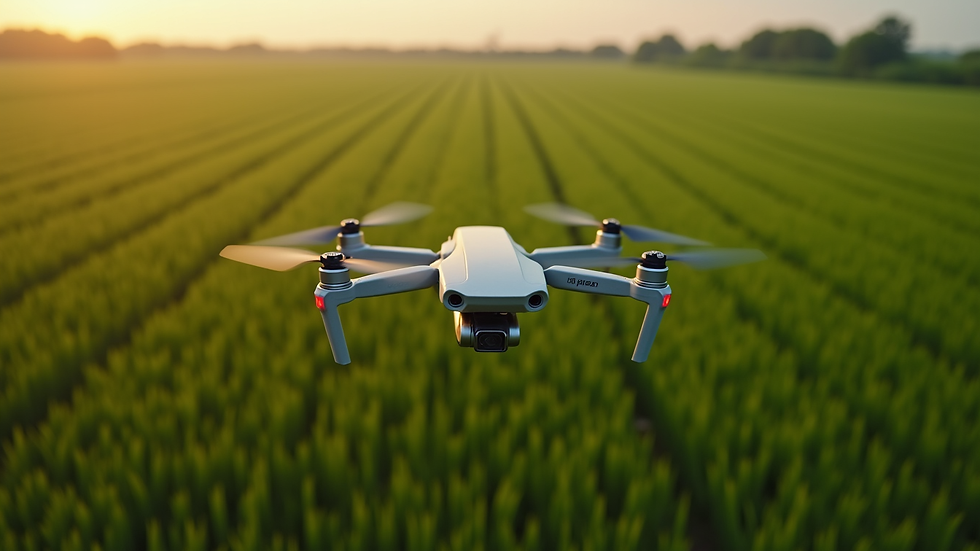
Agricultural drone solutions provide farmers with a bird’s-eye view of their fields, enabling precise monitoring and management. These drones are equipped with advanced sensors and cameras that capture high-resolution images and data, which can be analysed to assess crop health, soil conditions, and pest infestations.
Some key benefits of using drones in agriculture include:
Accurate Crop Monitoring: Drones can cover large areas quickly, providing detailed images that help identify stressed plants or disease outbreaks early.
Efficient Resource Management: By pinpointing areas that need attention, farmers can optimise the use of water, fertilisers, and pesticides, reducing waste and environmental impact.
Time and Labour Savings: Traditional field inspections are time-consuming and labour-intensive. Drones automate this process, freeing up valuable time for farmers.
Improved Decision Making: Data collected by drones supports informed decisions about planting, irrigation, and harvesting schedules.
For example, a farmer using drone imagery can detect a patch of crops suffering from nutrient deficiency and apply fertiliser only where needed, rather than treating the entire field uniformly.
How Agricultural Surveys UK Utilise Drone Technology
In the UK, agricultural surveys have embraced drone technology to enhance data collection and analysis. Organisations conducting agricultural surveys uk use drones to gather precise information about crop types, growth stages, and land use patterns. This data supports government policy, research, and farm management practices.
Drones help overcome challenges such as:
Access to Difficult Terrain: Some farmland areas are hard to reach on foot or by vehicle. Drones can easily fly over these zones.
Seasonal and Weather Constraints: Surveys can be conducted quickly during optimal weather windows, ensuring timely data.
Data Accuracy and Consistency: Automated drone flights reduce human error and provide consistent data sets over time.
By integrating drone data with Geographic Information Systems (GIS), surveyors can create detailed maps and reports that guide agricultural planning and sustainability efforts.
Practical Applications of Agricultural Drone Solutions
Farmers and agribusinesses can apply drone technology in various practical ways to boost efficiency:
Crop Health Monitoring
Using multispectral and thermal cameras, drones detect plant stress invisible to the naked eye. This early warning system allows for targeted interventions.
Soil and Field Analysis
Drones can map soil variability and moisture levels, helping farmers decide where to plant and how to manage irrigation.
Planting and Seeding
Some advanced drones are capable of planting seeds directly, speeding up the sowing process and reducing labour costs.
Irrigation Management
By identifying dry patches, drones help optimise irrigation schedules, conserving water and improving crop growth.
Pest and Disease Control
Early detection of pest infestations through drone imagery enables timely treatment, preventing widespread damage.
Yield Estimation
Drones provide accurate crop counts and growth measurements, assisting in forecasting yields and planning harvests.
Farmers can combine drone data with farm management software to create detailed action plans, track progress, and improve overall productivity.

Overcoming Challenges in Implementing Drone Technology
While agricultural drone solutions offer many advantages, there are challenges to consider:
Regulatory Compliance
Operators must adhere to aviation laws and obtain necessary permissions for drone flights, especially in populated or restricted areas.
Initial Investment Costs
Purchasing drones and related software can be costly, though prices are decreasing as technology advances.
Technical Skills Requirement
Farmers and staff need training to operate drones effectively and interpret the data collected.
Data Management
Handling large volumes of data requires robust storage solutions and analytical tools.
To overcome these challenges, farmers can:
Partner with specialised drone service providers who offer expertise and equipment.
Attend training workshops or online courses to build drone operation skills.
Use cloud-based platforms for data storage and analysis to simplify management.
Stay updated on local regulations and best practices for drone use.
By addressing these issues proactively, farms can maximise the benefits of drone technology.
Future Trends in Agricultural Drone Solutions
The future of agricultural drone solutions looks promising with ongoing innovations:
Artificial Intelligence Integration
AI algorithms will enhance data analysis, providing real-time insights and predictive analytics for crop management.
Swarm Technology
Multiple drones working together can cover larger areas faster and perform complex tasks collaboratively.
Improved Sensors
Advances in sensor technology will allow detection of more subtle crop conditions and environmental factors.
Autonomous Operations
Fully autonomous drones will reduce the need for human intervention, making surveys even more efficient.
Sustainability Focus
Drones will play a key role in promoting sustainable farming by optimising resource use and reducing environmental impact.
Farmers who adopt these emerging technologies early will gain a competitive edge and contribute to the future of smart agriculture.
Embracing agricultural drone solutions is a strategic move for modern farming. By integrating drones into their operations, farmers can enhance efficiency, reduce costs, and improve crop outcomes. Whether for crop monitoring, soil analysis, or pest control, drones provide valuable data that supports smarter decision-making. As technology continues to evolve, the role of drones in agriculture will only grow, helping to meet the challenges of feeding a growing population sustainably.


Comments